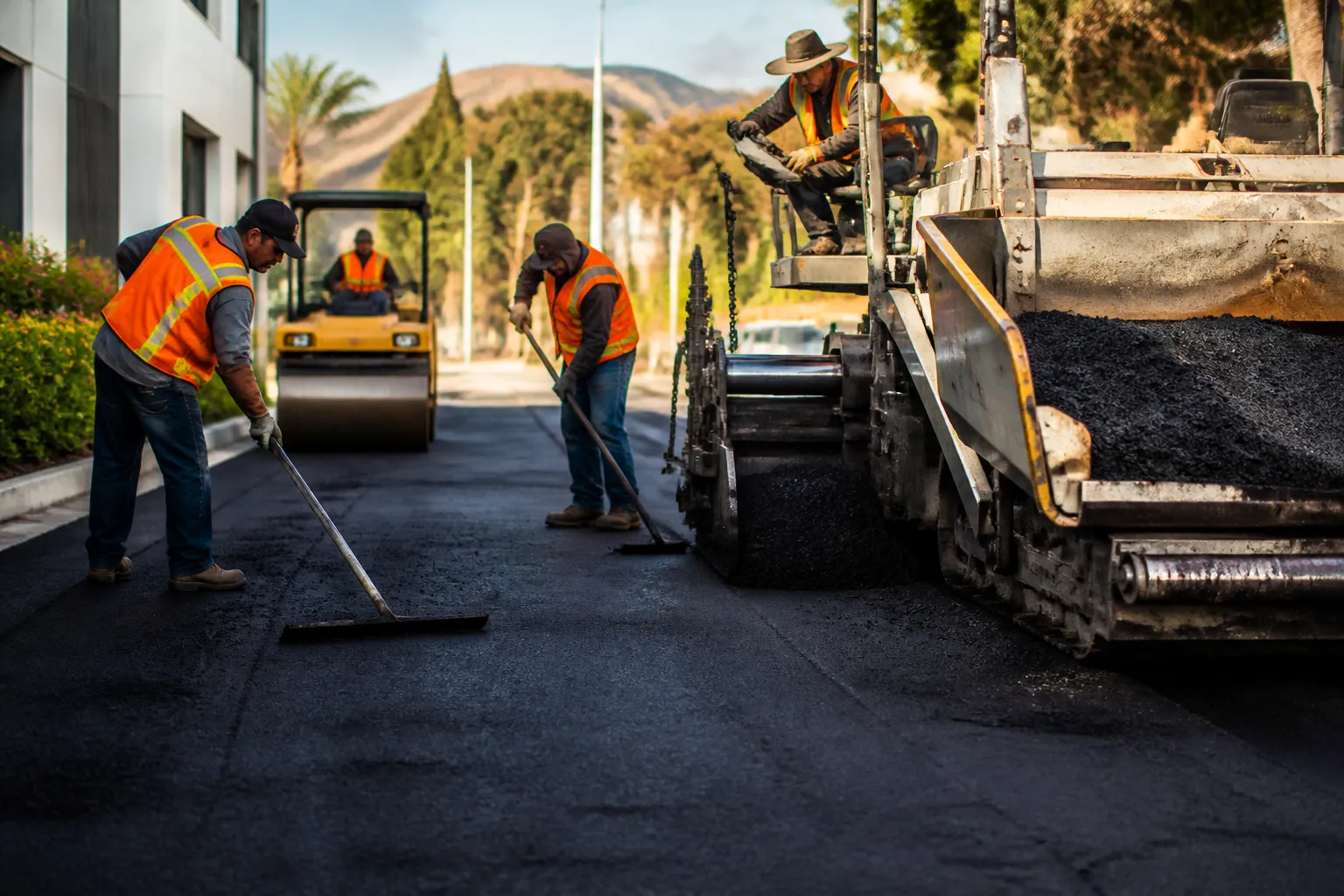
Van Nuys Asphalt Paving provides practical asphalt solutions for property owners throughout Van Nuys and nearby communities.
Potholes can begin as small surface defects, yet they can grow into a trip hazard, a vehicle hazard, and a source of more expensive pavement repairs. In Van Nuys, a driveway or parking lot does not need constant freezing weather to develop potholes. Heat, sunlight, water, traffic, and an aging pavement base can all work together to weaken asphalt. Knowing what starts the damage makes it easier to spot the warning signs and address the problem before a small repair becomes a larger patching project.
How a pothole forms
Asphalt pavement is a system, not just a black surface. It includes the asphalt layer above a compacted base and soil below it. A pothole often starts when water enters a crack or worn area in the asphalt. The moisture can soften or erode the material beneath the surface. As vehicles roll across that weak spot, the asphalt flexes more than it should, cracks at the edges, and eventually breaks loose.
The hole may look sudden because the visible surface can hold together for a while. Once traffic removes the weakened asphalt, however, the opening can widen quickly. Water then has an even easier route into the base, which can make the repair area larger with each rain event and each vehicle pass.
Common pothole causes in Van Nuys
Sun and oxidation
Van Nuys receives long periods of strong sun. Ultraviolet exposure gradually oxidizes the binders in asphalt, causing the surface to fade from black to gray and become less flexible. A dry, brittle surface is more likely to crack under traffic or temperature changes. Oxidation alone does not create every pothole, but it removes some of the pavement’s ability to resist the stresses that lead to one.
Water entering cracks
Rain is less frequent here than in many climates, but drainage still matters. Water can enter through open cracks, joints, failed patches, and pavement edges. It may collect below the surface when a driveway has low spots, a parking lot has blocked drainage, or runoff is directed toward the asphalt. Even a short period of standing water can reveal an area that needs attention.
Traffic and turning pressure
Repeated vehicle loads press down on pavement and its base. Heavy delivery vehicles, work trucks, or vehicles that make sharp turns in the same location create concentrated stress. Parking lot entrances, dumpster areas, and the edge of a residential driveway are frequent trouble spots. When the base has already been weakened by moisture, this pressure can break the surface apart.
Weak base or poor drainage
Sometimes the source of the problem is below the asphalt. A base that was not compacted evenly, soil that shifts, or drainage that continually washes out material can leave the surface without support. In those cases, simply filling the visible hole may not last. The damaged material usually needs to be removed so the base can be evaluated and rebuilt where necessary before new asphalt is placed.
Oil, fuel, and deferred maintenance
Automotive fluids can soften asphalt binders, especially when spills remain on the surface. Leaves, dirt, and debris can also hold moisture against the pavement and conceal small cracks. When routine crack filling and cleaning are delayed, water has more time to reach the base. A small crack is generally easier and less disruptive to address than a failed section of pavement.
Early signs to watch for
Look for more than a fully formed hole. Alligator cracking, where interconnected cracks resemble a reptile’s skin, often signals weakness below the surface. Other warning signs include a soft or spongy area, loose gravel, crumbling edges, a depression that holds water, or a patch that is breaking at its perimeter. Marking and monitoring these areas after rain or heavy use can help a property owner see whether the damage is expanding.
Ways to help prevent potholes
- Keep cracks sealed: Evaluate and fill cracks before water can travel into the pavement structure.
- Manage drainage: Clear drains and gutters, and correct areas where runoff repeatedly pools or crosses the asphalt.
- Clean spills promptly: Remove oil and fuel residue using an asphalt-safe approach to limit binder damage.
- Reduce concentrated loads: When possible, avoid frequent sharp turns and prolonged heavy vehicle parking in the same weak area.
- Schedule preventive maintenance: Sealcoating can protect sound asphalt from sun and surface wear, but it should follow needed crack and patch repairs.
- Repair small failures early: A timely patch can keep a localized break from allowing more water into the base.
When patching is the right response
A pothole should be repaired with more than loose material placed in the opening. A lasting repair typically involves cutting or removing failed asphalt, cleaning out damaged material, addressing unstable base material, and placing and compacting new asphalt to meet the surrounding surface. The exact scope depends on the depth of failure, drainage, traffic level, and the condition of nearby pavement.
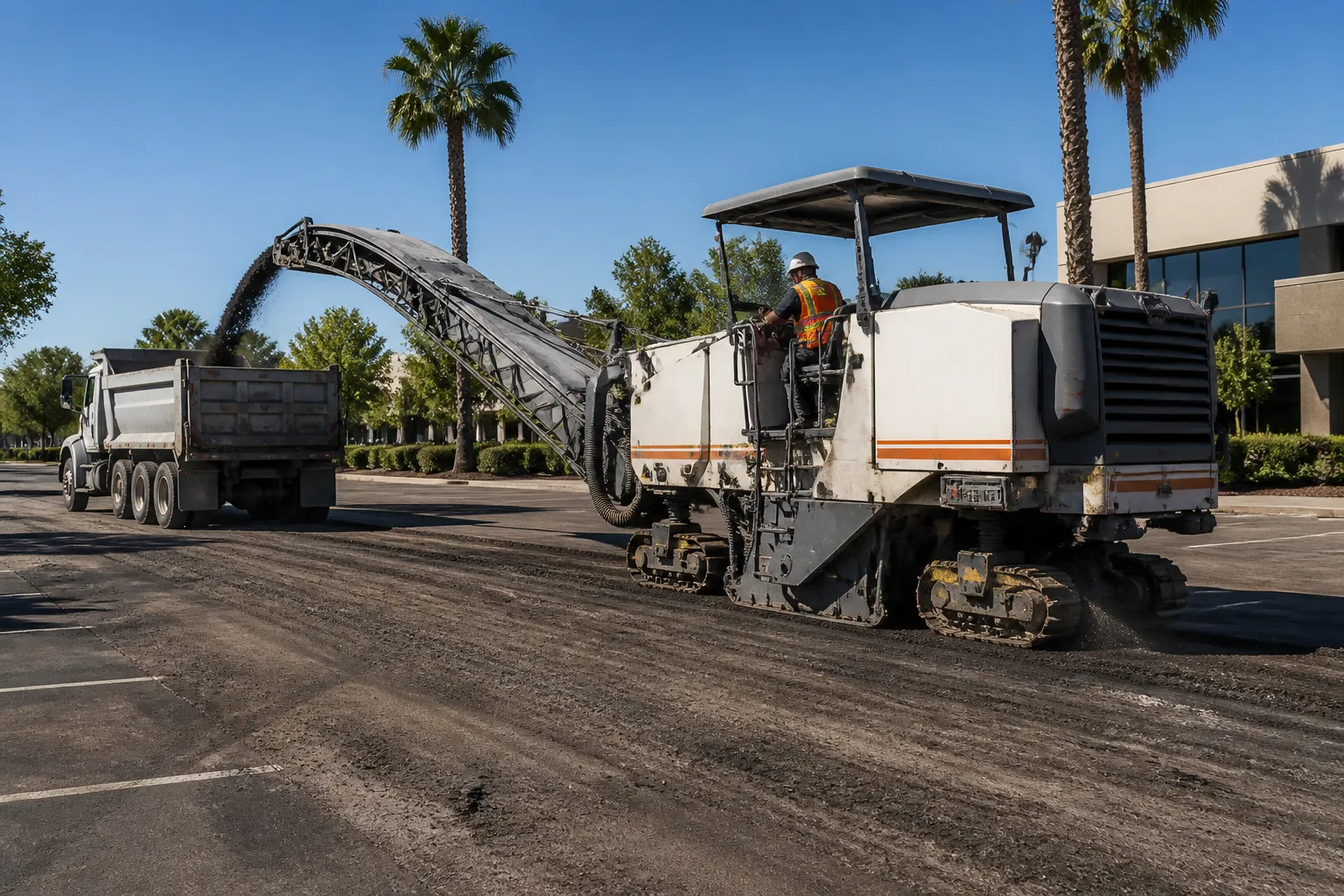
If potholes appear in several areas, the property may also need a broader evaluation. Widespread cracking or repeated failures can indicate that resurfacing, milling, drainage work, or base repair should be considered instead of performing isolated patches one at a time.
Protect your pavement before damage spreads
Van Nuys Asphalt Paving can inspect potholes, cracks, and drainage-related pavement concerns for residential driveways and commercial parking areas. A practical assessment can identify whether a localized repair is appropriate and what maintenance steps may help protect the rest of the asphalt. Call +1 (747) 247-9560 to discuss your pavement’s condition and next steps.