Van Nuys Asphalt Paving provides practical asphalt solutions for property owners throughout Van Nuys and nearby communities.
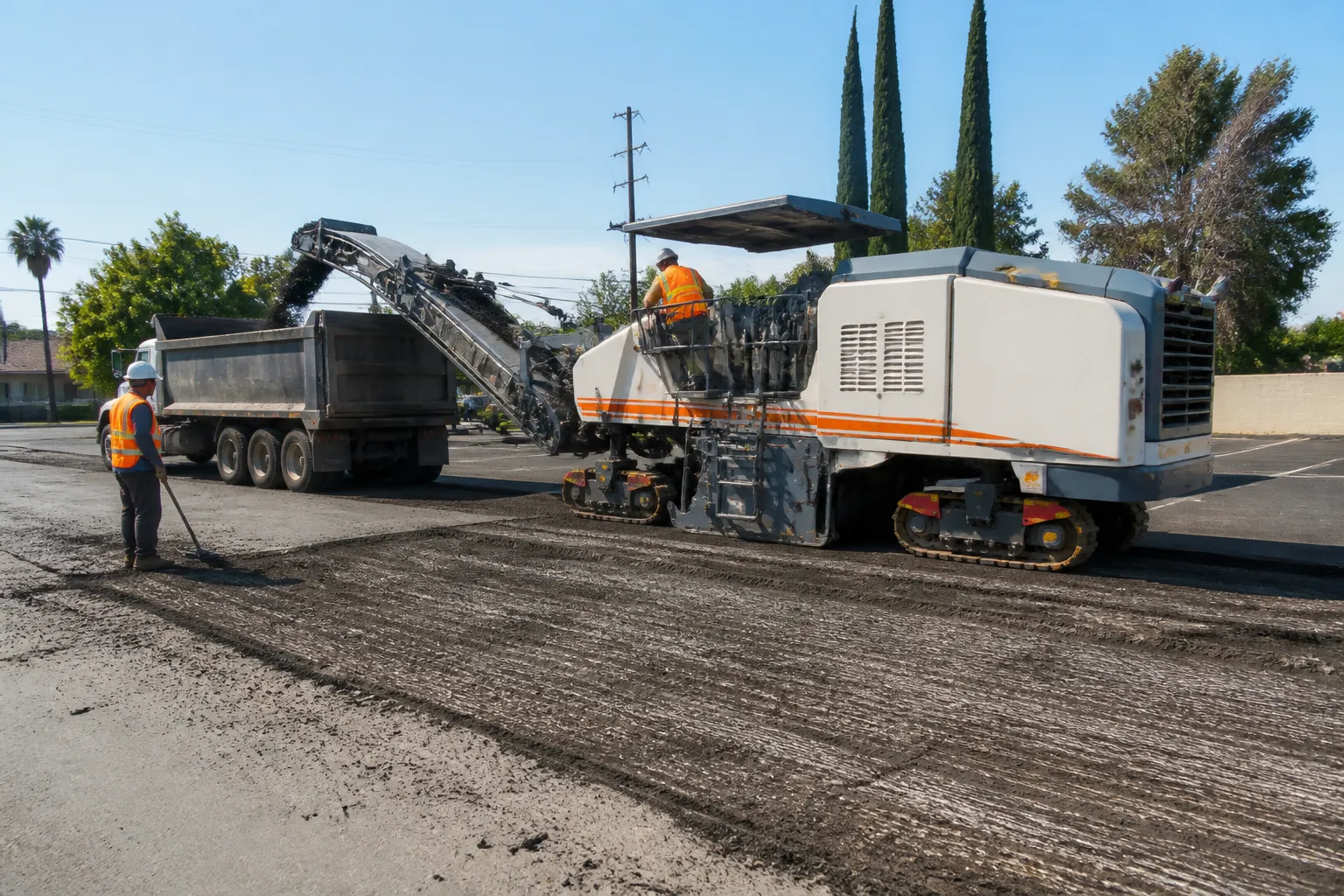
Asphalt milling removes a controlled upper layer of worn pavement so the next phase of repair or resurfacing can start from a more even surface. It is a practical option for Van Nuys driveways, parking lots, and access areas with widespread surface wear, rough transitions, or grade concerns.
Van Nuys Asphalt Paving reviews pavement condition, water movement, traffic use, and the connection to curbs, entries, and adjoining asphalt before recommending milling. The goal is to preserve suitable pavement while creating the right preparation for new work.
Milling can make sense when the top layer has worn down but the pavement below it still has value. Removing the specified depth can help manage height at garage entries and curbs while preparing the area for a new asphalt overlay. If there are deep failures or soft areas, those sections may need repair before resurfacing.
Before work begins, we review the pavement depth, damaged sections, existing grades, drainage paths, and places where the asphalt meets entries, curbs, or adjoining pavement. This helps identify the work limits and determine whether milling should be paired with patching or other repairs.
Milling can help create room for new asphalt where a fresh layer would otherwise make transitions too high. This is especially useful at garage approaches, curbs, drainage points, and driveway connections.
Removing a worn surface layer does not solve every problem below it. We consider whether the remaining pavement and base are stable enough for the planned overlay or whether certain areas need deeper repair first.
We identify the work limits, review the pavement depth to be removed, and prepare a plan around access and traffic. The existing surface is milled, material is cleared, and the prepared area is checked before additional repairs or new asphalt are installed.
The right scope depends on the condition beneath the surface. Milling is not a substitute for addressing failed base material, but it can be an efficient part of a broader paving plan when the existing pavement is suitable.
We inspect the paved area, connections, traffic patterns, and conditions that affect the work.
The milling area is planned around the pavement condition and the intended finished grade.
The designated asphalt layer is removed in a controlled manner.
We check the milled area for localized repairs, drainage considerations, and readiness for the next step.
New asphalt or the related repair work can proceed when the surface is properly prepared.
For a driveway, milling can help manage elevation where asphalt meets a garage, sidewalk, or street. For a parking lot, it can help create smoother transitions at drive aisles, curbs, loading areas, and entries before resurfacing. Each project is assessed according to the use of the surface and the condition of the pavement.
We also consider access during the work. Properties with regular vehicle activity may need a clear plan for the affected area so normal traffic can be managed around the paving process.
Milling is generally a preparation step, not the final surface. After the worn layer is removed, the exposed area can be repaired as needed and prepared for new asphalt. An overlay may then provide a renewed surface with more manageable heights and cleaner connections.
Once the project is complete, ongoing crack attention, drainage maintenance, and prompt repair of localized damage can help protect the new surface from premature wear.
It removes a controlled depth of existing asphalt from the surface.
Yes. It is often used to create a more suitable surface for new asphalt.
No. Deep base failures may need separate repair.
Yes. It can help manage transitions near entries and curbs.
Yes. It is commonly used before lot resurfacing work.
A site review helps determine whether milling is appropriate.
Contact Van Nuys Asphalt Paving at +17472479560 to discuss asphalt milling in Van Nuys.
Get Started
Tell us about your driveway, parking lot, or pavement concern. We will help you choose the right approach based on the surface condition, traffic level, and budget.