Van Nuys Asphalt Paving provides practical asphalt solutions for property owners throughout Van Nuys and nearby communities.
Small breaks in asphalt can quickly turn into loose edges, shallow holes, and rough driving areas. Asphalt patching gives property owners a focused way to correct localized damage before it spreads across a driveway, parking area, or private access lane.
Van Nuys Asphalt Paving provides practical asphalt patching in Van Nuys, California for residential and commercial properties. We review the damaged section, the surrounding pavement, drainage, and traffic use so the repair fits the surface instead of simply covering the visible problem.
Patching is useful when damage is limited to particular sections and the rest of the pavement still has a stable base. A failing area can develop after water reaches the base, vehicles repeatedly turn in one spot, or an older repair starts to break apart. Addressing the area early can keep the problem from becoming a larger resurfacing or replacement project.
We look for the cause as well as the broken surface. A patch needs sound edges and a prepared area to blend into the surrounding pavement. If the damage is widespread or the base is no longer supporting the surface, we explain when another solution may be more practical.
A durable patch starts with an honest assessment of the damaged area. The visible hole is only part of the picture. We consider how far the damage reaches, whether water has affected the base, and whether the surrounding asphalt has enough strength to support a clean repair.
That review helps us recommend a patch that matches the property. For a driveway, the concern may be an uneven spot where vehicles enter or turn. For a parking lot, it may be a damaged traffic lane or a broken section that creates a trip hazard for people walking to a building.
Surface wear may need a different repair than a section that has broken through to the base.
Standing water and poor drainage can weaken repaired areas if the source is not considered.
Repeated turning, stopping, and heavy loads can change the way a patch should be prepared.
We check whether the surrounding surface is stable enough for a localized repair to make sense.
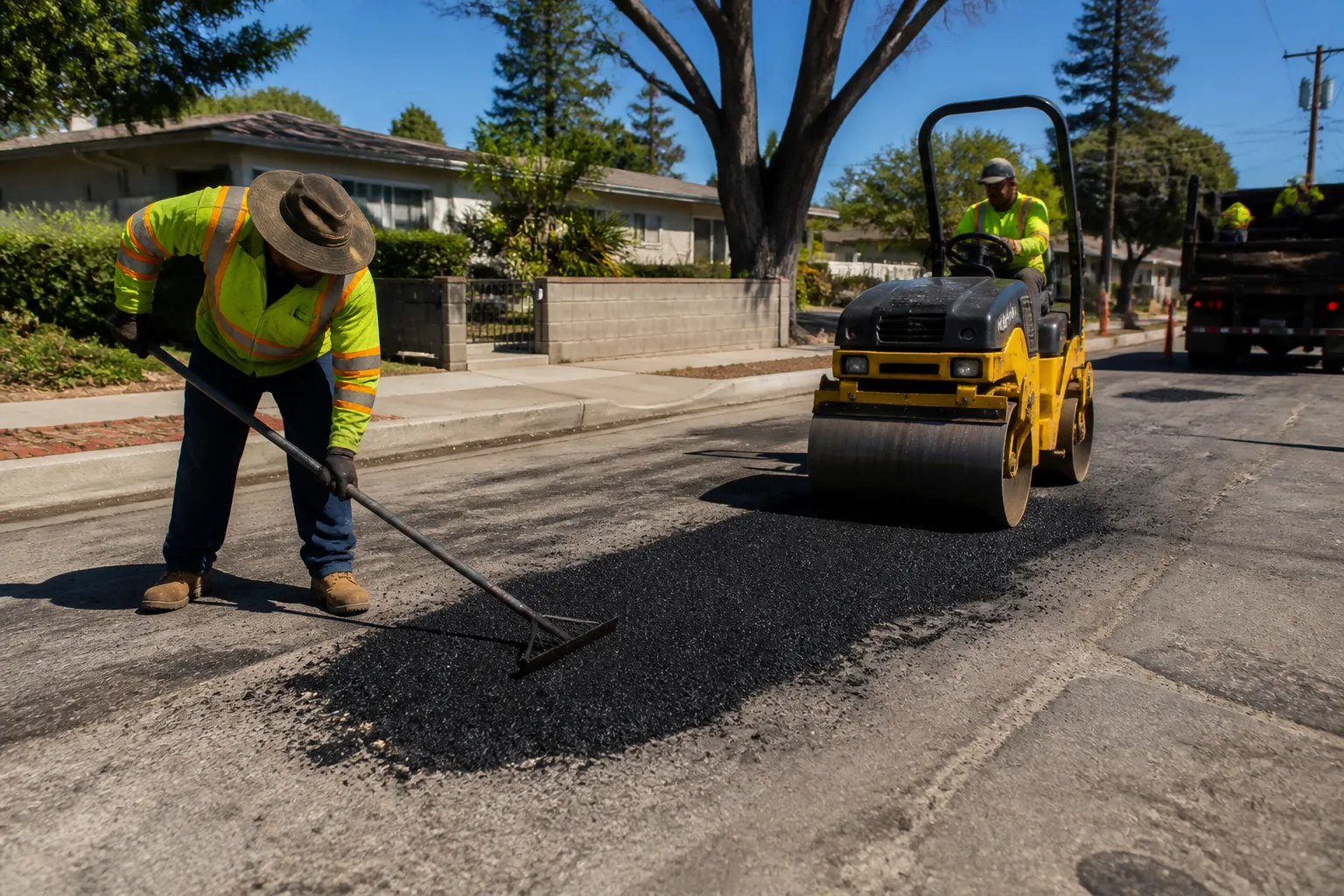
We keep the work focused on restoring a clean, usable section of pavement. The damaged material is removed as needed, the repair area is prepared, and fresh asphalt is placed to connect with the surrounding surface. The exact steps depend on the condition below the asphalt and the size of the affected section.
Careful preparation matters because it creates firmer boundaries for the new material. A patch should not leave loose edges or a sudden change in grade that makes the area harder to use. We work toward a repair that supports normal traffic and gives the pavement a more consistent appearance.
We identify the failed section and establish clean boundaries around the repair.
Broken asphalt and unsuitable material are taken out so the repair is not built over an unstable surface.
The underlying area is reviewed and readied to support the new patch.
New material is installed and compacted with attention to the surrounding grade.
We check the patch edges and surface connection before wrapping up the work.
Driveways often develop damage where vehicles turn, enter from the street, or sit in the same location over time. A patch can restore an isolated broken area and make it easier to use the driveway without committing to a full replacement when the rest of the pavement remains in reasonable condition.
We consider the shape of the drive, the way water moves across it, and how the repaired section will connect to the existing surface. When cracking or deterioration extends across much of the driveway, resurfacing or new driveway paving may provide a better long-term path.
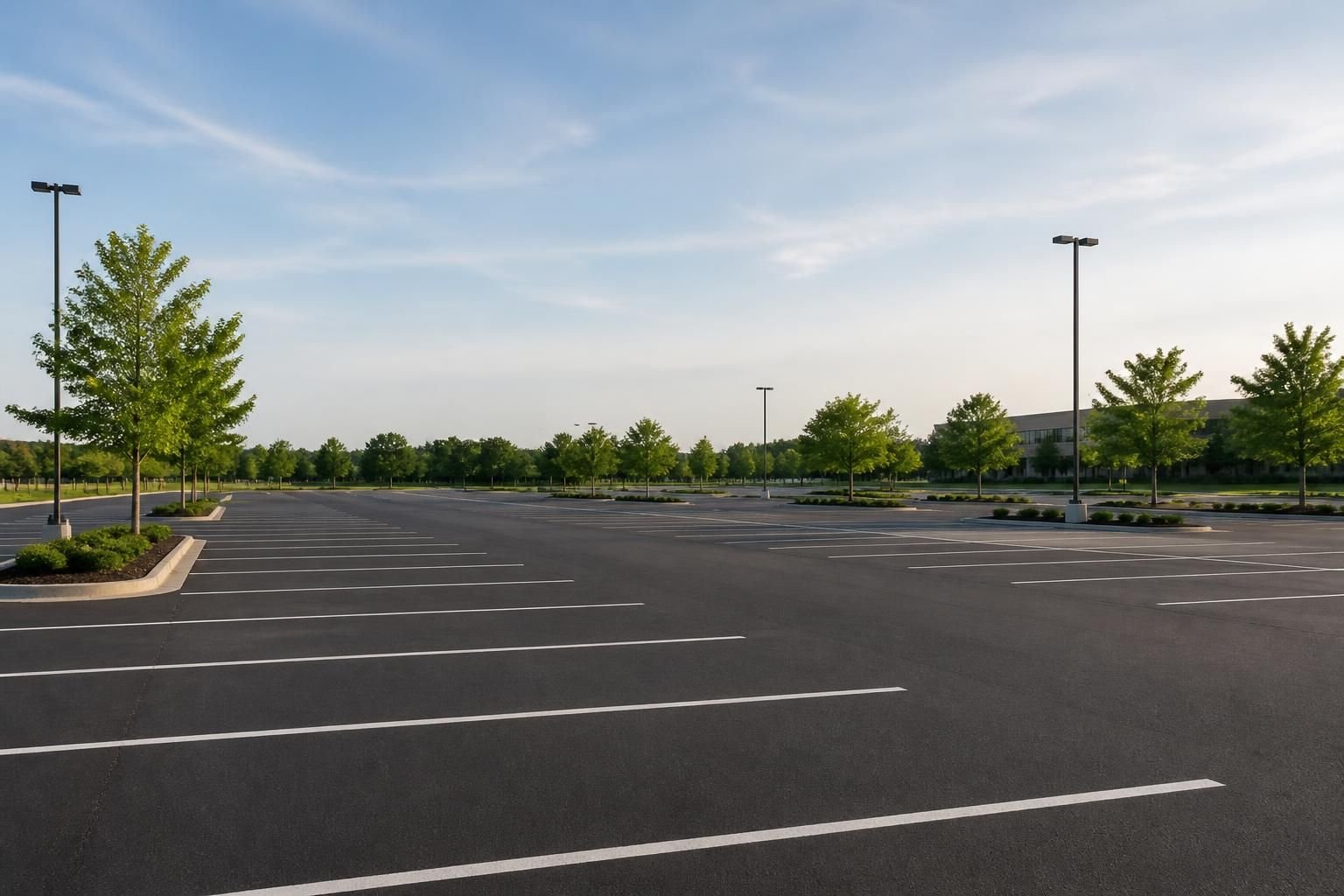
Parking lots and shared paved areas need repair decisions that account for vehicle movement and pedestrian access. Potholes, loose material, and uneven sections can make traffic flow less predictable and create areas that are difficult to maintain. Targeted asphalt patching can help restore damaged sections without disturbing pavement that is still serviceable.
For larger properties, we can discuss how patching fits alongside asphalt repairs, sealcoating, crack filling, or future resurfacing. That gives managers a way to prioritize the sections that need attention first while keeping a clear view of the condition of the overall lot.
Asphalt patching is not meant to solve every pavement problem. It works best when damage is limited and the surrounding surface has enough life left to justify a localized repair. If cracking, settlement, or deterioration appears throughout the pavement, a larger approach may offer more value over time.
We explain the practical options based on the property rather than pushing one answer. Crack filling may help with smaller openings, patching can address concentrated failures, and resurfacing or replacement may be appropriate where the surface has worn broadly. The goal is to match the work to the actual condition of the pavement.
Once a damaged section has been repaired, basic upkeep can help limit new wear. Keeping water from sitting on the pavement, addressing new cracks promptly, and watching areas with frequent turning or loading can make it easier to catch small issues before they become larger failures.
Sealcoating and pavement maintenance can also be useful for suitable surfaces. These services do not replace needed base repairs, but they can help protect intact asphalt and maintain a cleaner finish around repaired areas.
We serve property owners in Van Nuys and nearby San Fernando Valley communities, including Sherman Oaks, Encino, North Hollywood, Burbank, Glendale, Studio City, Panorama City, Reseda, Northridge, and Canoga Park. Whether the repair is a driveway pothole or a damaged parking-lot section, we focus on a straightforward plan for the site.
If you have localized asphalt damage that is getting worse, a site review can help determine whether patching is the right next step. We can discuss the condition of the pavement, the intended use of the area, and a sensible repair approach.
Patching is commonly used for potholes, broken sections, shallow depressions, loose edges, and other localized areas where the pavement has failed.
Yes. A pothole repair often involves removing unstable material and installing a properly prepared asphalt patch.
No. A patch is best for concentrated damage. Widespread cracking may call for crack filling, resurfacing, or replacement depending on the base condition.
Patches can deteriorate when loose material remains below them, water continues to reach the area, or surrounding pavement is no longer stable.
The work can often be planned around the affected section and the property’s traffic needs. The best approach depends on access and the size of the repair.
Keep drainage working, address new cracks early, and consider maintenance for intact pavement when it suits the condition of the surface.
Get Started
Tell us about your driveway, parking lot, or pavement concern. We will help you choose the right approach based on the surface condition, traffic level, and budget.