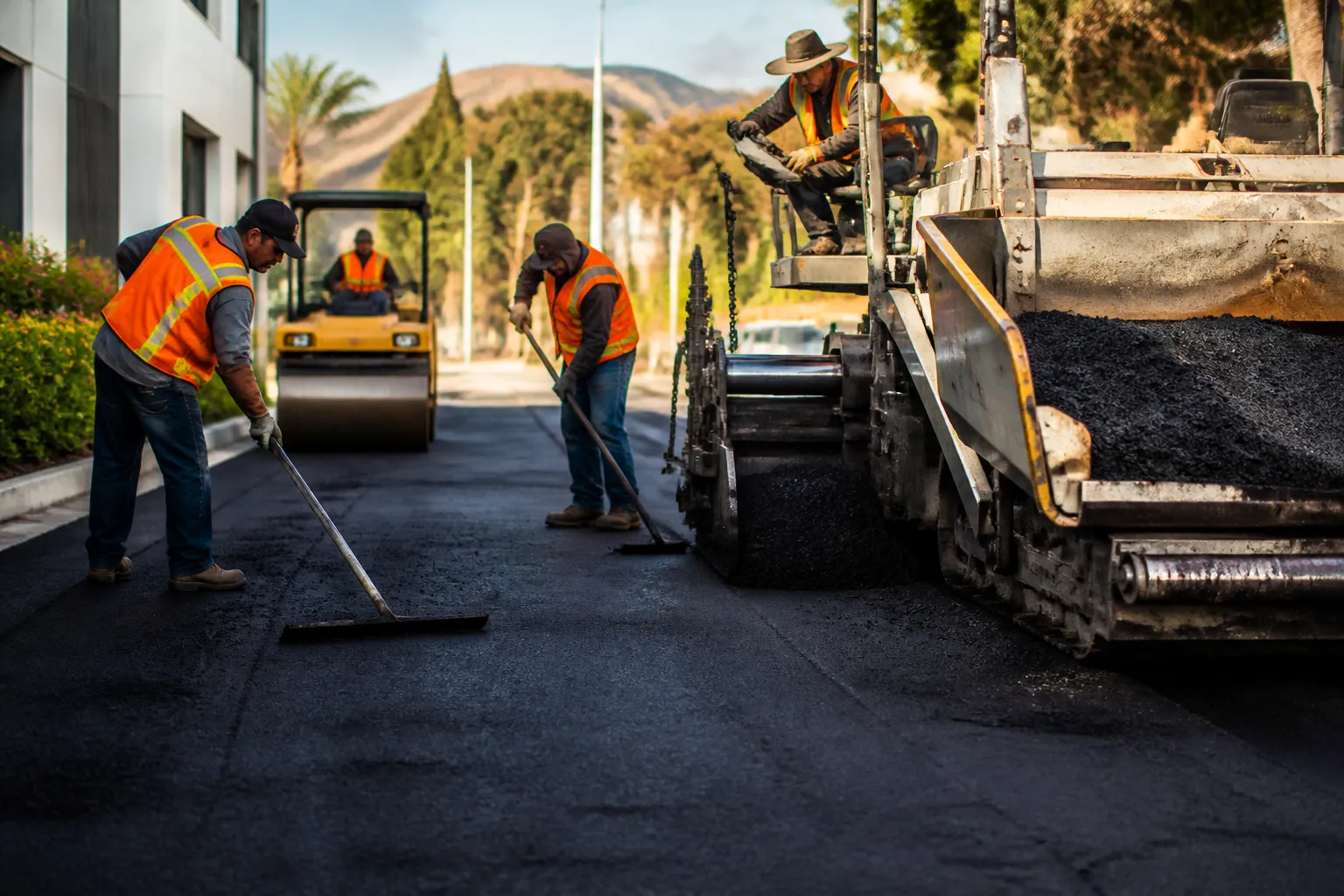
Van Nuys Asphalt Paving provides practical asphalt solutions for property owners throughout Van Nuys and nearby communities.
When asphalt begins to crack, fade, or feel rough underfoot, property owners often wonder whether resurfacing will solve the problem or whether full replacement is the more sensible choice. The answer is rarely based on appearance alone. A paved surface can look tired while its base remains stable, and a newer-looking surface can hide failures underneath.
This guide explains the difference between asphalt resurfacing and replacement, the signs that point toward each option, and the practical factors a Van Nuys property owner should consider before scheduling work.
What Asphalt Resurfacing Means
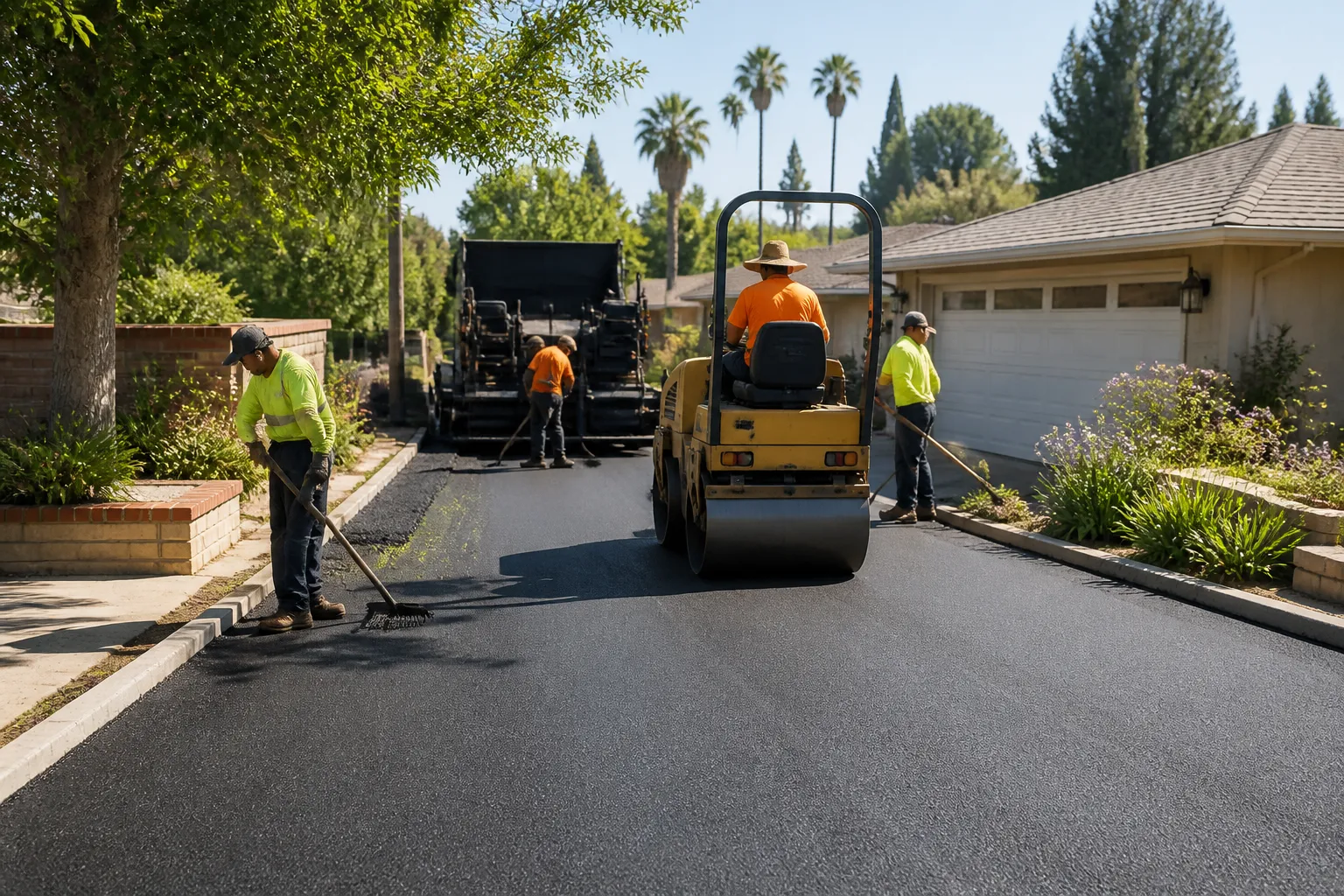
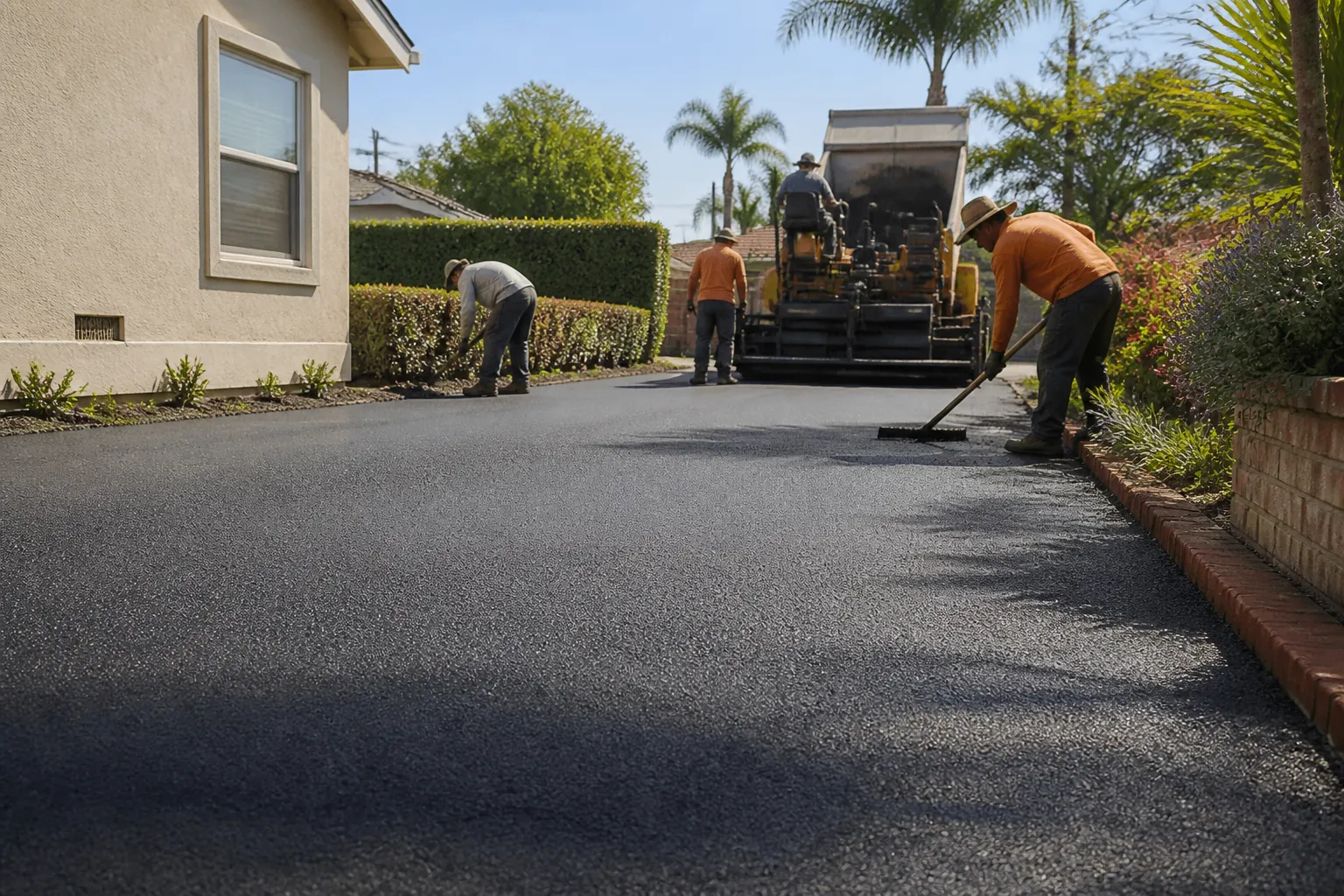
Resurfacing places a new layer of asphalt over pavement that is still structurally suitable. Damaged spots are repaired first, cracks and transitions are addressed, and the existing surface is prepared to receive a consistent new wearing layer. The process is also commonly called an asphalt overlay.
It can improve a faded driveway, parking lot, or access road when most of the problem is limited to surface wear. Resurfacing is not meant to disguise a weak foundation. If the pavement below the new layer continues to move or break apart, the new asphalt can eventually reflect those same problems.
What Full Replacement Means
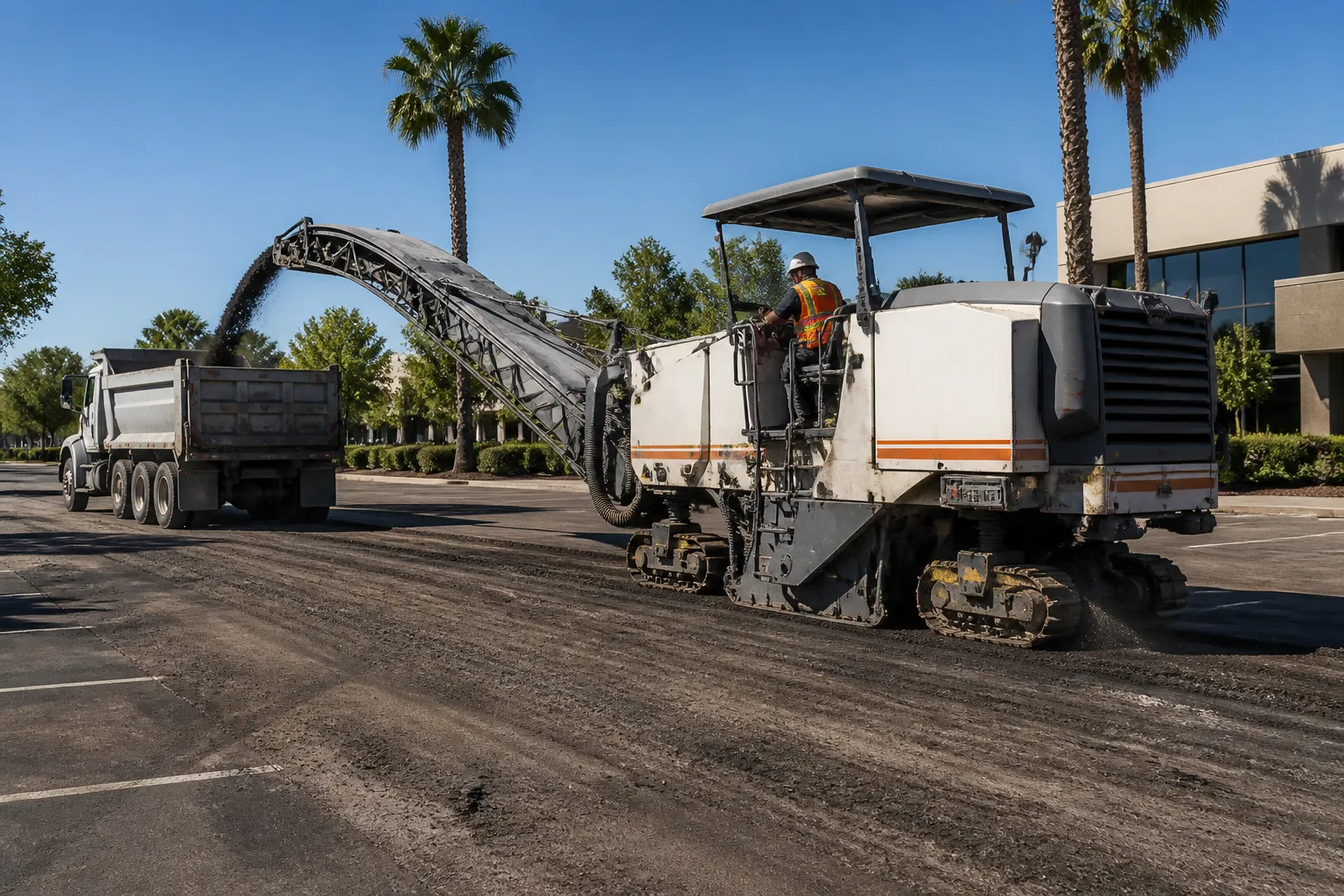
Full replacement involves removing failed asphalt and evaluating the material beneath it before new pavement is installed. It is usually considered when cracking, settlement, potholes, poor drainage, and soft areas indicate that the base is no longer providing proper support.
Replacement is more involved because it creates an opportunity to repair subgrade conditions, rebuild the aggregate base where needed, and establish appropriate finished grades. It can also be the better route when the property’s needs have changed, such as adding heavier vehicles, changing access patterns, or expanding a parking area.
Signs Resurfacing May Be a Good Fit
- The surface is faded, rough, or worn but remains firm under normal traffic.
- Cracks are limited and can be repaired before the new layer is placed.
- There are no broad soft spots, deep depressions, or recurring potholes.
- The base appears stable and the existing pavement is not extensively broken apart.
- Driveway and curb transitions can accommodate the additional surface height.
A site assessment matters because a similar-looking crack can have different causes. For example, a small isolated crack near an edge may be a manageable repair, while web-like cracking across a drive aisle can be a sign of structural fatigue.
Signs Replacement May Be Needed
Some asphalt issues begin below the surface. Alligator cracking, recurring potholes, crumbling edges, deep ruts, broad settling, and patches that repeatedly fail can indicate that a new top layer alone will not deliver a lasting result. Standing water and unstable areas are also reasons to look beyond resurfacing.
Replacement is often appropriate when failure is widespread or when drainage and finished elevation need more substantial correction. Removing failed asphalt lets the contractor see the condition below, repair weak areas, and install pavement designed for the property’s expected traffic.
Why the Base Is So Important
Asphalt is only one part of a pavement system. The soil and compacted aggregate below it need to distribute vehicle loads and remain stable through temperature changes and rainfall. If the supporting materials soften, shift, or lose compaction, the surface above can crack even when the asphalt itself is relatively new.
This is why an informed recommendation looks at more than the top layer. The base condition, water movement, traffic pattern, age of the pavement, and extent of prior repairs all help determine whether resurfacing or replacement is the practical option.
Drainage and Finished Height
Water can accelerate pavement deterioration when it collects in low areas or enters open cracks. Before resurfacing, it is important to consider how the added layer will affect runoff and elevation at garage doors, curbs, gates, sidewalks, drainage inlets, and adjoining pavement.
Milling may be used before an overlay to remove a controlled amount of existing asphalt and help manage transitions. Where the grading problem is larger, replacement may provide more room to correct slopes and avoid directing water toward the building or neighboring areas.
Traffic and Property Use
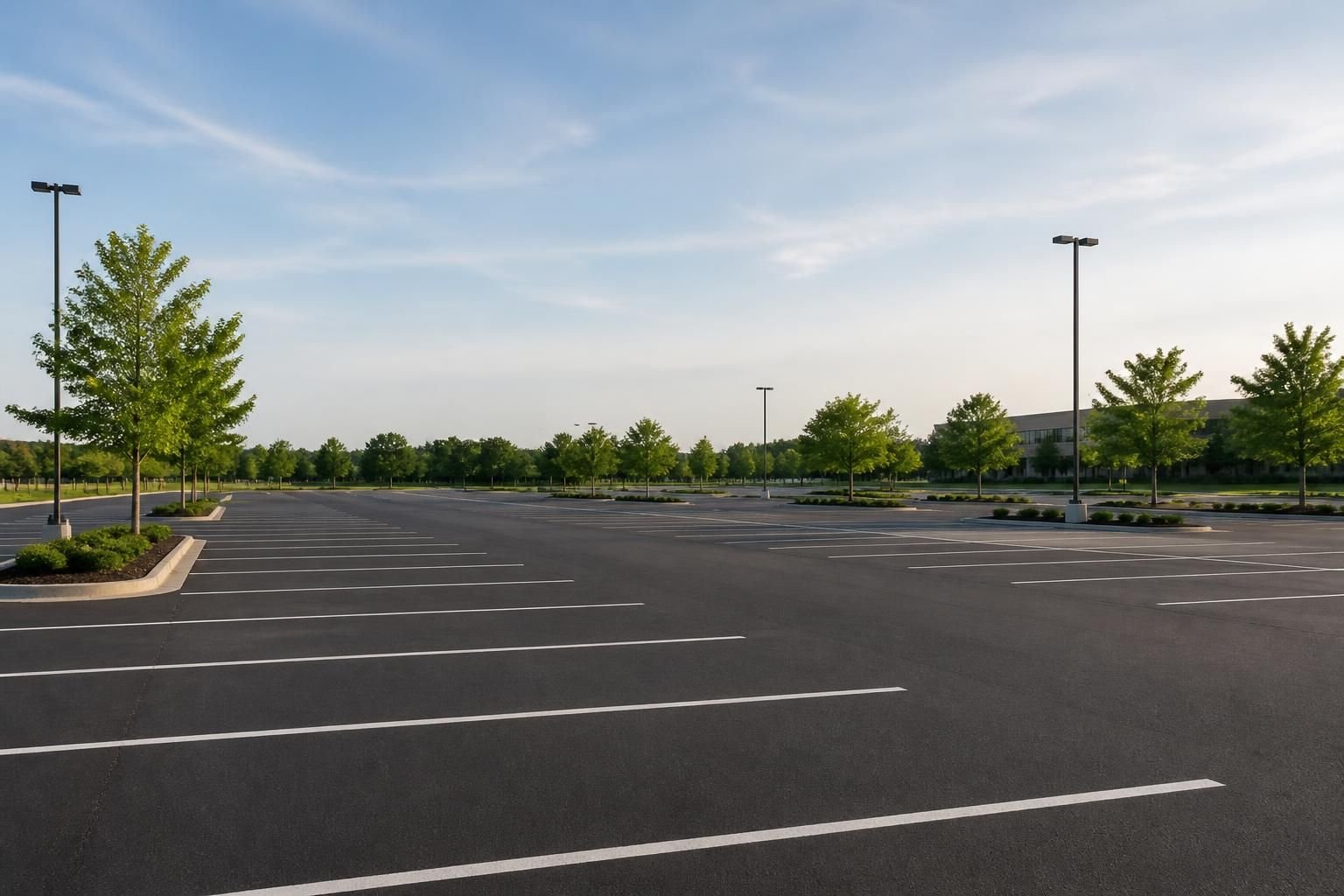
A lightly used residential driveway does not have the same demands as a commercial lot, loading area, delivery route, or shared access road. Heavy vehicles, tight turns, and repeated loading concentrate stress in specific places. Entrances, dumpster pads, drive aisles, and turning zones deserve special attention during an assessment.
The scope should reflect how the pavement is used now, not only how it was used when it was installed. If the property will receive more frequent deliveries, trailers, or service vehicles, the paving plan should account for that change.
How to Prepare for the Work
Before paving begins, identify vehicles, sprinkler heads, utility covers, gates, planters, and access points near the work area. Plan where vehicles will park while the driveway or lot is unavailable. For commercial properties, consider customer access, tenants, deliveries, and waste collection so the work can be coordinated with normal operations.
A written scope should explain which damaged areas will be repaired, how edges and transitions will be handled, and whether drainage concerns were observed. Comparing scopes this way helps property owners understand the difference between surface improvement and work that addresses deeper failure.
Making the Decision
Resurfacing can be an efficient option for pavement with a stable foundation and primarily surface-level wear. Replacement may be the stronger long-term choice when underlying failure, poor drainage, or widespread deterioration would undermine a new overlay. The goal is not simply a darker surface. It is a pavement solution that matches the property’s condition and use.
Van Nuys Asphalt Paving can review your driveway, parking lot, or access route and explain whether resurfacing, repair, or replacement fits the property. Call +17472479560 to discuss the next practical step for your asphalt.