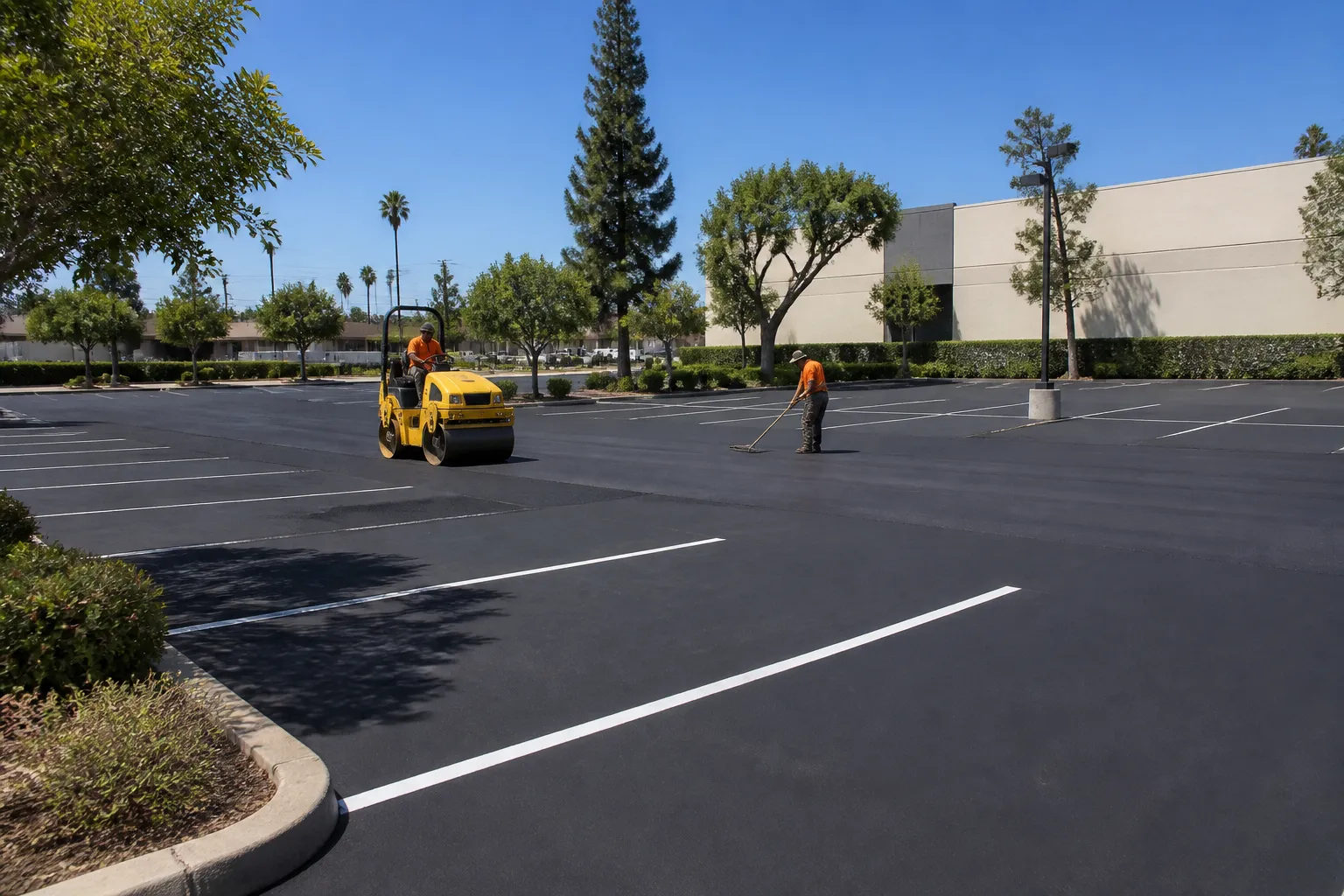
Van Nuys Asphalt Paving provides practical asphalt solutions for property owners throughout Van Nuys and nearby communities.
A commercial parking lot, drive lane, loading area, or private access surface needs to support daily traffic while giving visitors and staff a clear place to move. Cracking, rough patches, drainage issues, and failing edges can make that harder over time.
Van Nuys Asphalt Paving provides commercial asphalt paving in Van Nuys for properties that need new pavement, replacement areas, or a larger improvement plan. We review traffic patterns, existing grades, pavement condition, and the way the property is used before recommending the scope.
Office lots, retail centers, multifamily properties, service yards, and loading areas all place different demands on asphalt. We consider how vehicles enter, turn, park, load, and exit so the paving work supports normal activity.
Good asphalt performance begins below the finished surface. We look at the existing pavement or exposed base, cracking, water movement, elevation changes, and traffic the area receives. That helps determine whether preparation, localized removal, base work, or a new surface course is appropriate.
Turning vehicles, delivery activity, and customer traffic can concentrate wear in specific places. We identify those areas so the project reflects how the site is actually used.
Water that collects near entries, low spots, or curbs can shorten pavement life. Existing slopes and drainage paths are considered before new asphalt is placed.
We walk the property, discuss intended use, and identify paving limits and visible concerns.
We explain repairs or removal needed before paving.
The area is readied to support new asphalt and clean transitions.
Fresh material is placed and compacted with attention to grade and access.
We review the paved area and discuss traffic access, striping, or maintenance needs.
Some properties need a new paved area, while others have isolated failures within pavement that remains serviceable. Repairs can suit damaged sections, resurfacing may fit a worn surface with a stable base, and widespread failure can call for removal and replacement. We explain the practical differences based on the site.
A commercial paving decision is easier when the scope is tied to the current condition of the property. A lot with a few failing sections may benefit from targeted repairs and a planned resurfacing phase, while pavement with widespread base failure may need more complete work. We explain the difference in straightforward terms so you can prioritize the areas that affect access, appearance, and daily operations.
We also look at how the new work will meet existing pavement. Clean transitions at entries, curbs, loading areas, and drive aisles help the property function as expected after paving is complete. If striping or directional markings are part of the plan, those details can be coordinated after the asphalt surface is ready.
Commercial paving often needs to be coordinated around entrances, tenant access, deliveries, and parking availability. We discuss work limits and access needs before the project begins. For larger sites, phased work may be useful where the layout allows part of the pavement to remain available.
Before work starts, it helps to identify vehicles, equipment, deliveries, and users that need access to the affected area. Clearing the work zone and communicating expected access changes can make the project more manageable for tenants, employees, customers, and visitors.
Prompt crack filling, repair of small failures, sealcoating where appropriate, and refreshed striping can help manage surface wear. Watching for standing water, loose edges, and concentrated wear near loading zones makes it easier to address changes early.
After installation, continuing to monitor drainage, cracks, and high-wear areas helps property owners plan maintenance around the property’s needs.
We work on parking areas, access drives, service lanes, and other paved spaces used by businesses and multifamily properties.
Yes. A site review can determine whether localized repair is practical.
It can fit worn pavement with a sound underlying base.
Yes. Water movement, low spots, and grades are part of the review.
We discuss entrances, parking, traffic flow, and work limits before starting.
Addressing cracks early and keeping drainage working can help protect the surface.
Contact Van Nuys Asphalt Paving at +17472479560 to discuss commercial asphalt paving in Van Nuys.
Get Started
Tell us about your driveway, parking lot, or pavement concern. We will help you choose the right approach based on the surface condition, traffic level, and budget.