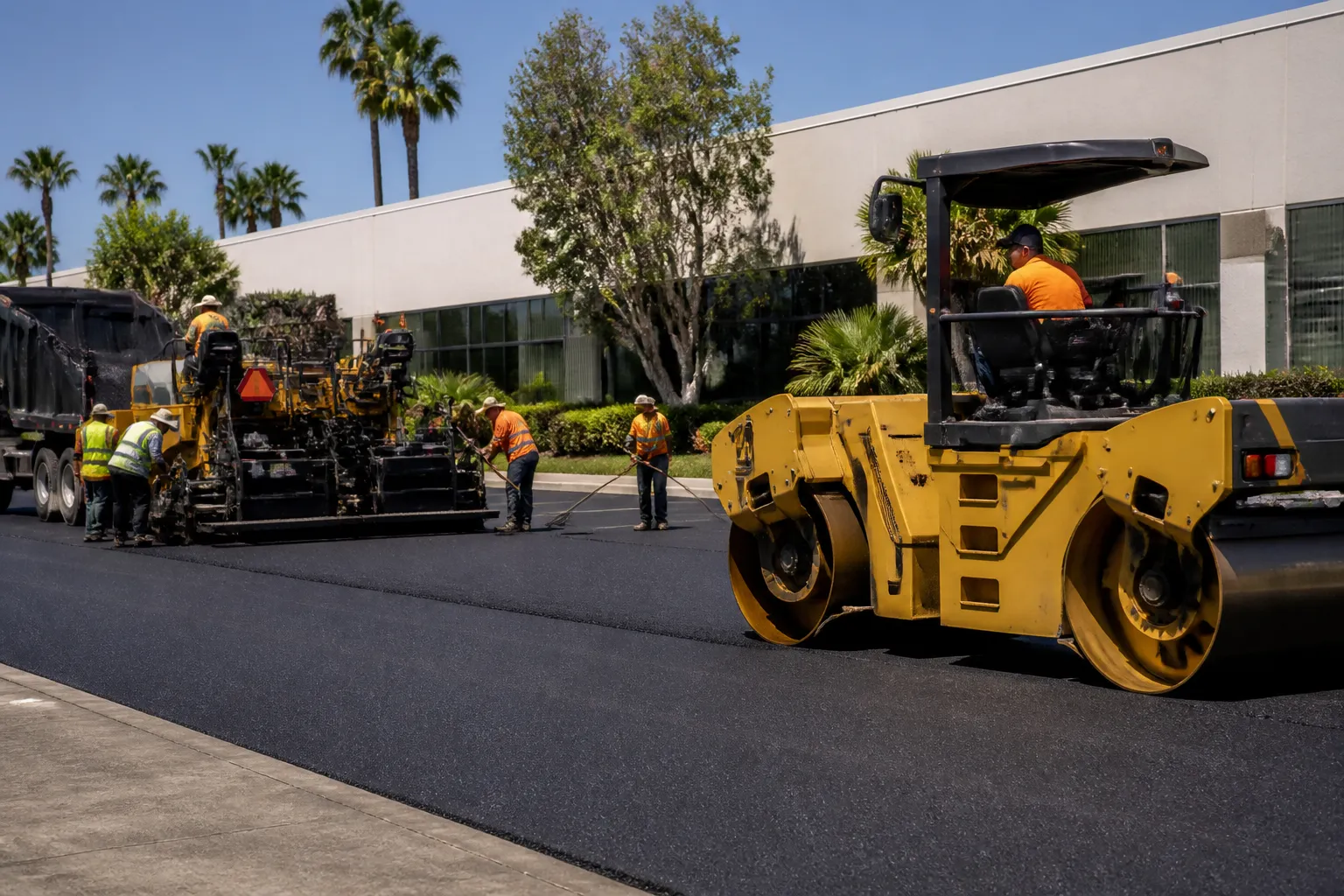
Van Nuys Asphalt Paving provides practical asphalt solutions for property owners throughout Van Nuys and nearby communities.
An asphalt overlay adds a fresh surface layer over existing pavement that still has a suitable base. It can restore a smoother, more consistent finish for Van Nuys driveways and parking areas without removing pavement that remains structurally useful.
Van Nuys Asphalt Paving reviews the condition of the asphalt, drainage, traffic patterns, and existing grades before recommending an overlay. That review helps identify the needed preparation and whether localized repairs should be completed first.
An overlay is commonly considered when pavement is worn, faded, rough, or marked by minor surface cracking, but the underlying base has not broadly failed. It can improve the appearance and day-to-day use of a paved area while extending the serviceable life of suitable pavement.
An overlay needs a suitable foundation. We review cracking patterns, low spots, damaged edges, patch areas, drainage, and the connection to curbs, entries, garages, or adjoining pavement. That helps identify whether the existing surface can support new asphalt or if repairs should be completed first.
A new layer can improve an aged surface, but it does not correct widespread base failure. If settlement, deep cracking, or soft areas point to a larger problem, we explain when repair or removal may be the more practical path.
Adding asphalt changes finished elevation. We consider driveway entries, garage thresholds, curbs, sidewalks, drains, and adjacent pavement so the completed surface has workable transitions.
Good preparation makes a difference in how an overlay performs. We inspect the surface, address appropriate damaged areas, prepare transitions, and consider how water will move across the completed pavement. New asphalt is then installed to create a consistent surface that fits the property.
If pavement has widespread deep cracking, settlement, or base failure, a larger repair plan may be more practical. We explain the condition of the site and the options that fit it.
We assess the existing surface, traffic use, work limits, and drainage considerations.
Areas that need attention are identified before the new surface is placed.
The pavement is readied so the overlay can connect properly and provide a more even finish.
Fresh asphalt is placed with attention to grade, access points, and the intended use of the area.
We check the transitions and discuss practical care for the paved area.
For a residential driveway, an overlay can renew a weathered surface when the underlying pavement remains stable. It can improve the driving surface and help create a cleaner appearance without a full reconstruction.
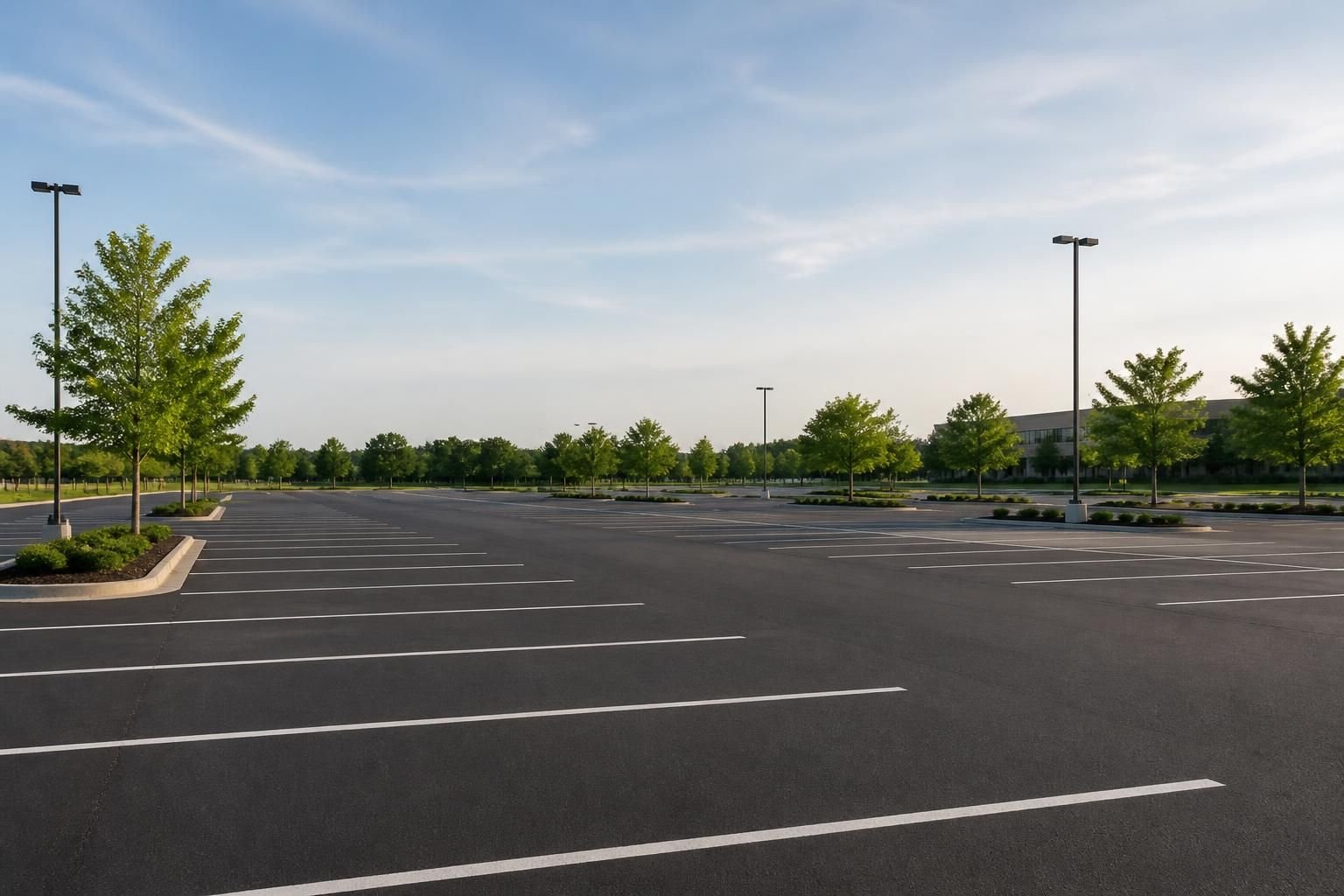
For parking areas, overlays can be useful when the pavement is worn across a broader area but remains structurally suitable. We consider vehicle routes, parking stalls, turning zones, drainage, and striping needs when planning the work.
After the new surface is in place, regular observation helps protect it. Address cracks as they develop, keep drainage paths clear, and watch high-traffic areas for early signs of wear. For lots, refreshed striping and appropriate maintenance can help the surface remain organized and easier to use.
Maintenance is most effective when it responds to the actual condition of the pavement. Small changes are generally easier to manage before they develop into larger repair needs.
It is a new asphalt layer installed over prepared existing pavement.
Some cracking needs repair first, depending on the pavement condition.
No. Replacement involves removing and rebuilding more of the existing pavement.
Yes, when the pavement has a suitable base and preparation plan.
Yes. Water movement and grades are important before adding new asphalt.
A site review can identify whether it is a practical option.
Contact Van Nuys Asphalt Paving at +17472479560 for asphalt overlay work in Van Nuys.
Get Started
Tell us about your driveway, parking lot, or pavement concern. We will help you choose the right approach based on the surface condition, traffic level, and budget.