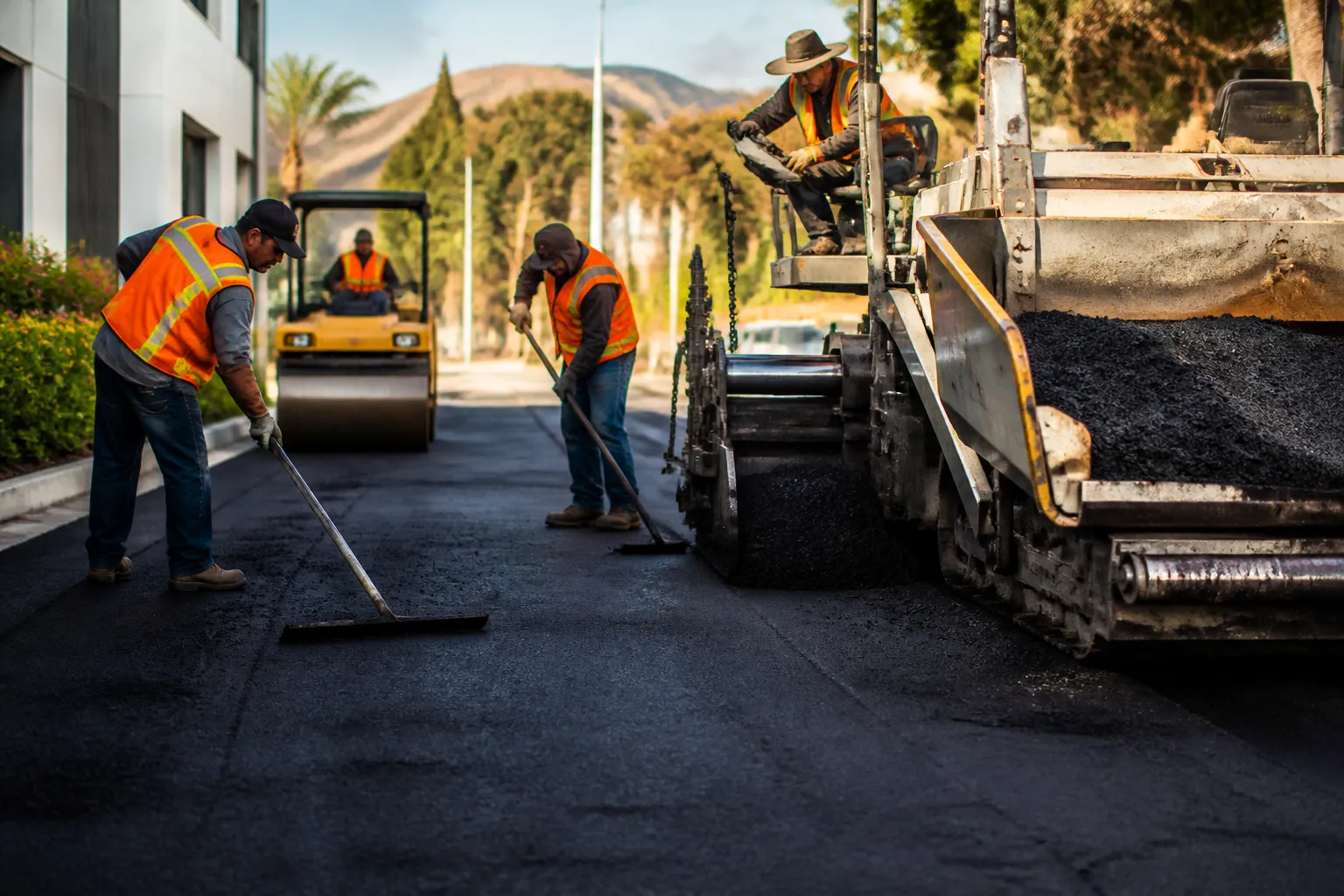
Van Nuys Asphalt Paving provides practical asphalt solutions for property owners throughout Van Nuys and nearby communities.
An asphalt driveway in Southern California can provide many years of everyday use, but its lifespan is not set by the calendar alone. The quality of the base, drainage, traffic, sun exposure, maintenance, and repairs all influence how long the surface remains smooth and serviceable. For a Van Nuys homeowner, the useful question is not simply how old the driveway is. It is whether the pavement is still structurally sound and whether small issues are being addressed before they spread.
With proper installation and regular care, an asphalt driveway commonly serves a property for roughly 15 to 25 years. Some surfaces need significant work earlier, while a well-maintained driveway with a stable foundation can last longer. Understanding the conditions that shorten pavement life helps you plan practical maintenance instead of waiting for widespread failure.
Start With the Foundation
Asphalt is the visible wearing surface, but it relies on the prepared ground and aggregate base beneath it. If the soil is soft, poorly compacted, or unable to drain, the asphalt above may move under vehicle weight. That movement can show up as cracks, depressions, ruts, or broken edges.
A solid base spreads vehicle loads and supports the pavement over time. Installation also needs appropriate thickness for the driveway’s expected use. A surface used only by passenger vehicles has different demands than one that regularly receives delivery trucks, work vans, trailers, or recreational vehicles. When heavier loads repeatedly use an area designed for lighter traffic, damage often begins in wheel paths and turning areas.
Southern California Sun and Heat
Van Nuys summers put pavement through long periods of sun and heat. Ultraviolet exposure slowly dries the binders in asphalt, and high surface temperatures can make the pavement more vulnerable to scuffing or impressions under concentrated loads. Heat alone does not mean a driveway will fail, but it makes routine observation and maintenance more important.
Parked vehicles, trailers, and equipment can place more stress on hot asphalt than moving traffic. Homeowners can avoid repeated sharp turns in the same spot and avoid placing heavy items on a soft, hot surface when possible. Keeping oil, fuel, and other automotive fluids off the driveway also matters because these materials can soften or stain asphalt.
Water Still Matters in a Dry Climate
Southern California does not receive steady rain year-round, but occasional storms can expose drainage issues quickly. Water that sits in a low area or enters an open crack can weaken support below the asphalt. Water can also travel along driveway edges, at garage transitions, and near landscaping if the grades are not carrying it away.
After rain, walk the driveway and look for puddles that remain longer than expected. Note areas where runoff crosses the pavement or where soil is washing away beside the edges. These are useful observations to share during a paving assessment. Correcting a drainage concern early can protect both the driveway and nearby property features.
Signs of Normal Aging
Fading from dark black to gray, a slightly rougher texture, and a gradual loss of flexibility are common signs of aging. These conditions do not automatically mean replacement is needed. If the driveway remains firm, drains properly, and has only limited surface wear, preventive work may extend its useful life.
Fine surface cracks should be monitored rather than ignored. They may remain small for a period, but they create openings for water and debris. Crack filling or targeted repair can help keep a localized issue from becoming a larger break. A maintenance review is especially useful when cracks start appearing in several areas or return after prior repairs.
Signs the Driveway May Need More Than Maintenance
Some problems point to trouble below the top layer. Web-like alligator cracking, soft spots, repeated potholes, deep depressions, broad settlement, and crumbling edges can indicate that the base is no longer providing reliable support. Applying sealer or placing a thin new layer over those conditions may improve appearance temporarily without resolving the cause.
When these symptoms are widespread, a contractor may recommend removing failed pavement, repairing the base, and installing new asphalt. In other cases, isolated damaged sections can be repaired before resurfacing the rest of a stable driveway. The appropriate solution depends on the extent and pattern of the damage, not just the appearance of one crack.
Maintenance That Supports a Longer Life
- Keep the driveway clean so leaves, soil, and standing debris do not hold moisture against the surface.
- Address cracks while they are small and before they widen or develop broken edges.
- Repair potholes, failed patches, and edge damage instead of allowing vehicles to break surrounding asphalt.
- Use sealcoating on a schedule suited to the driveway’s condition and traffic, after necessary repairs are complete.
- Watch drainage after storms and keep runoff from repeatedly crossing or ponding on the pavement.
- Avoid sharp turns and prolonged heavy loading in the same area, particularly during hot weather.
When to Schedule an Assessment
Consider a professional review when the driveway begins to show new cracking, puddling, loose aggregate, rough patches, or changes in level. An assessment can separate cosmetic aging from structural failure and help you prioritize work. It is also helpful before buying a property, adding a gate or garage, or planning a change that will increase vehicle weight or traffic.
Van Nuys Asphalt Paving can evaluate the condition of your driveway, identify practical repair or maintenance options, and explain when resurfacing or replacement makes more sense. Call +17472479560 to discuss your Southern California asphalt driveway and the next sensible step for its condition.